Category Archives: Ecology

The specter of mass extinction

One of our companions, for now

If current trends continue, one half of all species of life on Earth will be extinct in 100 years. — E.O. Wilson

What will people do?
After the garden is gone.
— Neil Young

Something terrible is happening. Does anyone notice? A few do. In developed countries, only the more observant see it. From time to time, though, we hear about it in the media. We’re destroying the global ecosystem, our life support system.

Too easy to deny

So what? We don’t have to listen to that. Nothing’s happening here. Sure, there’s not as much open land, we hear about companies cutting down something called “old growth forests,” some animals have disappeared. Big deal, our lives go on about the same. (more…)

Population and consumption: both major players

Growing footprint Consider this a working paper of sorts. It adds to the last post here which discussed the relationship between population and consumption. But it’s only a snapshot of an initial bit of online and library research. I hope to flesh out the topic more fully in the future.

At the end of that post I mentioned two issues I had barely touched on, which deserved more attention. They were (a) the question of whether, even hypothetically, we could ignore population growth and count solely on advances in clean energy technologies to escape ecological catastrophe, and (b) the implications of the observation that over the last century global energy consumption has increased more than population numbers. In my view, the former question is the simpler one, and I’ll get to in the near future. In this post I’ll provide some of what I’ve found concerning the latter issue.

The consumption argument

It’s a common observation that, over the last half century or more, resource consumption rates have increased at a faster pace than population size. I’ve seen this observation used to support the view that population growth isn’t as serious an environmental problem as our growing rates of consumption. Sometimes a proponent of this argument presents data showing that the magnitude of growth of total world energy consumption, or of total consumption of a specific resource, is considerably larger than that of population. (more…)

An unholy matrimony

[The follow-up to this essay is found here.]

The chicken knows
“Overpopulation is a serious problem getting worse every year.”

“Overpopulation is a myth.”

“There is no population problem.”

“There’s overconsumption, … but not overpopulation.”

“[The problem is] overpopulation in the South and overconsumption in the North.”

That’s just a sampling of the kinds of conflicting statements about population growth you can find on the Web and elsewhere. Is it any wonder the topic confuses people? Readers here should have little doubt which of the first three views I share. I would suggest, as well, that statements dismissing the population issue are often disingenuous and politically motivated.

Good question

But what about about the population versus consumption question? (more…)

If I’m right, do I win a Nobel Prize?

Nobel Medal

It’s not easy trying to spread the word about population growth. Part of the trouble is that others, sometimes highly respected in their fields, spread contrary information. Nobel prize winners go around telling people population growth is a good thing; bring it on! George W. Bush regretted saying such a thing and said so. But the population growth cheerleaders haven’t yet expressed any remorse about their destructive pronouncements. One can only hope that in the end the truth will out.

Gary, we need to talk

While we’re waiting for the truth to win the day, let’s take a quick look at one attempt to convince us we should welcome continued population growth. (more…)

Economists can’t take (quite) all the blame

Suzuki In the previous article here, I reiterated a fundamental problem with mainstream economics. It fails to recognize that all economic activity is a part of, and as dependent on the ecosystem as any other aspect of human activity or the activities of other species. I urged mainstream economists not to let debates about the details of theory distract them from shifting their view to one in which the economy is viewed in its true relationship with nature. If they can do that, they can truly help to save the world by rethinking our approach to economic growth which, as it stands, is degrading the ecosystem and pushing us toward environmental collapse.

It’s not all the fault of the economists 🙂

But it’s not just mainstream economics which has lost sight of it’s connectedness to the ecosystem. The problem with economics is, in part, likely a reflection of a broader societal phenomenon. Recently, I came across a couple of David Suzuki articles which highlight the seriousness of the problem. (more…)

Can ecological economists save us from the mainstreamers?

Killing the earthMainstream economists are trying to kill us. They don’t think of it that way, but they should. The standard policies promoting endless economic growth of the conventional sort are destroying the ecosystem. And ecocide, should we follow through with it sufficiently, could easily mean the loss of many millions of human lives. When those economists promoting and shaping policy continue to push ecocidal policies when they could instead play a central role in protecting the ecosystem, how is that not homicide? [1] (more…)

The Texas argument

Texas is bigSome people deny the problem of population. They insist that neither the present world population size nor its continuing growth is a problem. Some of these folks are influenced by certain writers, often far to the right politically, and typically focused on mainstream economics, who espouse this sort of population denial. (We’ll look at some of those writers in the future.) Others are merely drawing conclusions from their everyday observations. From neither contingent have I seen a very substantive argument, but a common argument from the second group is especially silly.

Texas is great, but this is ridiculous

Usually, it goes something like this: “There’s no population problem. It’s a myth. You could fit every human being on earth inside the state of Texas with plenty of room for everyone.” You can see an example of this in comments on Anderson Cooper’s blog on the CNN site. (Search the page for the phrase “state of Texas” – without the quotes.) [1] (more…)

Removing vast forests

Deforestation is an ongoing, serious problem for many developing countries. It’s impact is global, however, as the loss of forests and the benefits they provide the ecosystem are felt.

In some parts of the world, local population growth is the major culprit. In the Amazon, while it is self evident that broader population growth creates demands which play an important role, locally most of the guilt goes to classic examples of conventional, unsustainable economic growth. Agricultural giant, Cargill, for example, has been a major player in the deforestation process.

In the Amazon it’s a vicious cycle, with humans clearing the rainforest, contributing to climate change, while climate change causes drying and fires which further destroy the rainforest. Here’s a brief video: (more…)

Did someone say, “steady state economy”?

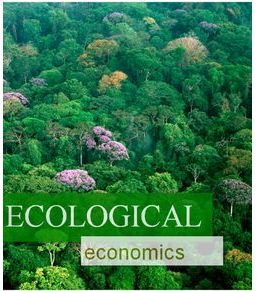
EcoEconTo some extent, I’d like the early posts here to be sequential in laying out a case for the site’s basic arguments. But timely items from around the Web and elsewhere are part of the plan as well. With that in mind, I bumped into a piece on Alternet by Stephan Harding. It’s about the idea of implementing “Tradable Energy Quotas” (TEQs) as a way of promoting a “steady state economy.”

Previously, I’ve mentioned the importance of the idea of the steady state economy. Any thoughtful examination of the current pervasive growth imperative, leads to the conclusion that endless economic growth — with its growth in physical throughput — is unsustainable. Our ecosytem has limits. And such growth is leading quickly to its collapse. A move to a steady state economy would be a key step toward putting on the brakes and taking the ecosystem fully into account in our economic policies. (more…)

How do they face their children?

Corporate profits versus the earthHaving touched on population growth in the last entry, it’s time for a quick look at how economic growth has become a serious threat to the global ecosystem. This is a large topic which has filled a good number of books. But on its most basic level its logic is simple. The key point is that neoclassical economics, the dominant economic model for much of recent history, is based in large part on an assumption that the economy, as a whole, can and should continue growing forever. A major part of such growth is its physical dimension, which is well reflected in increasing “throughput,” defined by Herman Daly as “the flow beginning with raw material inputs, followed by their conversion into commodities, and finally into waste products.” (p. 28 ) The neoclassical view promotes unending physical growth and throughput

The problem with forever

When confronted with the prospect of depleted natural resources as a result of ongoing growth, the neoclassical economist’s answer is that human capital in the form of technical innovation will always make up for lost natural capital (natural resources), or even that we will always find new ways to extract ever more resources. (An article by the late economist, Julian Simon, provides a particularly striking example of this thinking.) The flaw in this model is self evident. It fails to acknowledge that the earth and its resources, as well as its absorptive and regenerative capacities, are finite. Indeed, it contrasts sharply with the newer “ecological economics” model which starts from the assumption that the economy is a part of the finite ecosystem and so should strive to respect its limits, lest it damage it. (more…)

The not-so-elusive population-environment link

Strip miningThe most basic assumption driving this site is that population growth and corporate economic growth team with per capita resource consumption as the primary drivers of today’s ecological decline. Perhaps, then, it’s best to devote this early entry to a bit of support for that assertion. There are people, after all, who question it.

Let’s start with population growth. Especially prominent among those who dismiss the idea that population growth is a problem have been a few economists—most notably the late Julian Simon—who cheerlead population growth, arguing that it is always to our benefit. Natural scientists, for the most part, do not much question it as a major cause of environmental degradation. That in itself speaks volumes. Nevertheless, is it possible to use simple logic to demonstrate a link between population growth and environmental damage? I believe so.

More people, more warming

Consider climate change. There is now an overwhelming scientific consensus that human activity is contributing significantly to global warming. The implicated human activity is anything we do which causes greenhouse gas emissions. One of those things is driving cars which burn fossil fuels. Clearly then, everything else being equal, more cars means more anthropogenic greenhouse gas emissions — the primary gas of concern being CO2.

World population has doubled since the early 1960s. As a result of that doubling there are now far more cars operating than there were 40 years ago. There are, therefore, more auto-related emissions. Those increased auto emissions mean more CO2 emissions and more forcing of climate change. [1] [2] It is therefore indisputable that population growth has contributed significantly to climate change. [3]

There, that was easy enough. And we could construct similar analyses of the relationship between population growth and other human sources of greenhouse gases. We could just as easily demonstrate the links between population growth and other aspects of environmental degradation. For a fuller discussion of the population-climate change link, see the relevant page on the Union of Concerned Scientists site. For more on the general topic of population and the environment try Al Bartlett’s excellent article, Reflections on Sustainability, Population Growth, and the Environment – Revisited. In future entries I’ll try to provide equally simple arguments to support other aspects of this site’s basic assumptions.
_______

[1] Note that CO2, the most significant greenhouse gas produced by human activity, has not historically been regulated by auto emissions standards.

[2] For voluminous information on the relationships between greenhouse gases and climate change see the various documents at the IPCC website. Of particular relevance to this post, see the top graph here, illustrating the increase over time of atmospheric CO2 and the associated estimated radiative forcing.

[3] Just to add some perspective, the U.S. Department of Energy reports, in fact, that, “In 2003, the transportation sector accounted for about 27 percent of total U.S. GHG emissions, up from 24.8 percent in 1990.” (Thanks to Wacki, who maintains the LogicalScience.com climate change blog, for that reference.)
_______
Image source: Stephen Codrington, posted on Wikimedia Commons under a Creative Commons Attribution 2.5 license

AddThis Social Bookmark Button

Welcome to Growth is Madness!

Our finite Earth from space.Our earth is in trouble. And that means we’re in trouble. It’s no exaggeration today to say we face a looming global ecological collapse. Scientists have warned us of this for more than a decade. The warnings, from individual experts, and organizations grow more urgent.

Yet, most people’s attention is on other news. There is little awareness of the gravity of the environmental problem we face and the likely consequences if it is not vigorously addressed.

There is even less awareness of the root causes of our environmental plight. This is not too surprising as their role in creating the problems we face has been suppressed by those with vested interests in shielding us from the truth.

Simple truth

Let’s start with some truth right now. The root causes of the ecological collapse of which scientists are warning are:

  1. Global population growth to levels beyond the earth’s carrying capacity for humans.
  2. Excessive and growing per capita resource consumption rates.
  3. Economic growth (the product of #1 and #2), as defined by Herman Daly, in the form of increased physical throughput, from the extraction of raw materials, through their manufacture into commodities, to their output as wastes.
  4. Our reliance on nonrenewable resources such as fossil energy.

Those four elements are of course closely linked, with one affecting another. It takes only simple thought experiments to recognize their impacts. Imagine, for instance, that there were only one quarter as many human beings on earth as there are today (about equal to the global population of 1900!). Clearly, there would be be far less environmental degradation. We could quibble over whether or not it would be exactly one quarter the current amount. (We might speculate that the variables listed should interact differently at different levels.) But the basic idea is clear. Think similarly about the other factors, and their importance comes to light.

Room for hope!

But before you close this site in dismay at what, up to here, seems a profoundly pessimistic message, I’ll point out there is room for much hope! Experts who study the global ecological problem are clear in their assessments (pdf) that there are effective actions we can take to avert disaster or, at the least, to soften the landing. It will take serious commitments from many nations, intergovernmental cooperation, corporate and individual efforts. Part of those efforts needs to be the spreading of accurate information to inspire others to help, whether they encourage their elected representatives to take action, or they take action themselves.

Enter GIM

Thus, I launch Growth is Madness! (GIM) to help fill a void I can hardly believe exists. Relative to other issues in the news, there is a terrible dearth of information, readily available to the public, on the nature and causes of the most important problem of our time, the global environmental crisis. As far as I know, this is the only weblog currently devoted expressly to addressing the fundamental causes of this crisis. [1] In this unique role, GIM will provide key information, investigating and elaborating on the ideas mentioned above, examining counterarguments, and more.

Because they are especially ignored by the mainstream press, the population and economic growth will figure prominently here. We will, however, touch as well on other relevant topics including peak oil, per capita consumption, the political and social factors driving the areas of growth in question, various ecological topics, and actions which might ameliorate the problem. We need much more awareness, after all, of the ecological “big picture.”

In a way, I wish someone else were doing this. Though trained as a social scientist in the “scientist-practitioner” model, my academic background is in psychology. Here, I’m forced to grapple with topics from the natural sciences, economics, sociology, and anthropology among other disciplines. Others would have immediately at hand more technical knowledge. But they’re not doing this.

Starting, then, with the information I’ve gathered, I’ll continue to research as I go. And I invite you to join me, to participate in the discussion under every entry. I’m more than willing, as well, to post guest articles relevant to the site.

Finally, to anyone reading GIM, I make this pledge: I’ll always make the effort to seek the truth, to back my arguments with sound logic, and to source my information well. In addition, I want readers to feel comfortable commenting here, to know I’ll reply civilly. On the other hand, I hope the title of this weblog makes clear that I won’t mince words when it comes to stating the truth as I see it about the topics I discuss. Growth really is madness.

Welcome to GIM!
_______
[1] Update: Greater familiarity with the available resources requires me now to qualify that statement. As a class, the sites which come closest to sharing the themes here are those focused on peak oil. While they specialize in oil depletion, often touching on related ecological issues such as population, GIM specializes in those other ecological issues, increasingly touching on peak oil.

Since writing this post, a small number of other blogs sharing GIM’s concerns have come online. Some appear in the blogroll here.

Also overlapping somewhat with GIM’s themes are a few sites which promote a return to primitivism. These folks, as well as some of those studying oil depletion, have concluded that, owing to the interactions of issues such as population overshoot and peak oil, society is headed for collapse and it’s too late to stop it. If current trends continue, I agree collapse is inevitable. I part with these analysts only in that I believe it’s premature to conclude there is no possibility we can change course soon enough and substantially enough to avert complete collapse. I would concede, though, there may be less time remaining to do so than most of us would like to believe.

Even if my assessment is too optimistic, it’s worth noting that even those convinced of the inevitability of collapse would agree there are a number of positive actions we can take now to soften the landing. Much of the content of GIM is consistent with that thought. We need to increase awareness to avert collapse, or at least to soften the landing.

_______

Updated: 8/24/07, 10/9/07
_______

AddThis Social Bookmark Button